


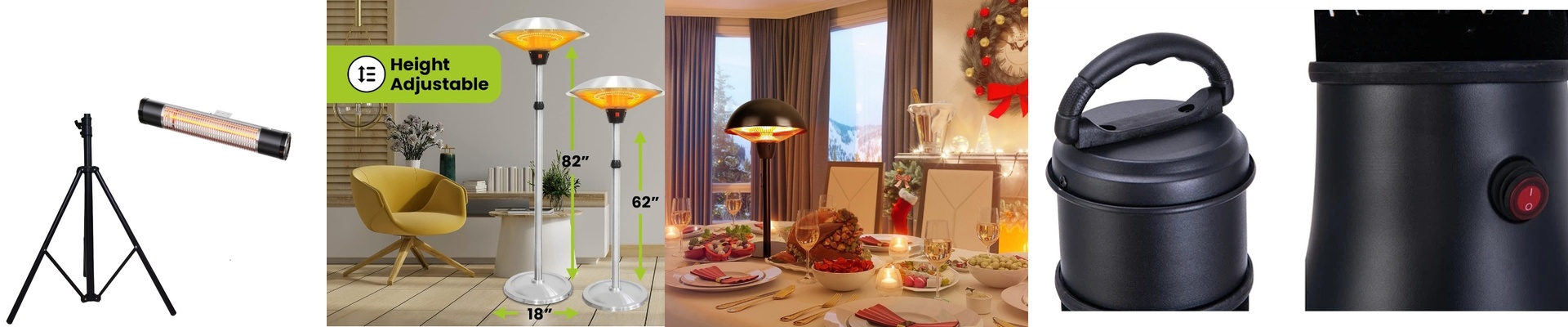


On the warehouse floor, cold isn’t just uncomfortable—it drags down pace and makes materials stiff. When the air hovers near freezing, order pickers slow down, dock doors stay closed longer, and even routine inspections eat up extra minutes. A warehouse heater that warms people directly, not the empty air above them, keeps work moving.
What matters, technically
We built this electric heater around infrared radiant warmth, so the heat travels outward in a focused beam—think of the sun warming your face on a clear day. The core uses a durable quartz tube element, so you get immediate output: no long warm-up, no blowers kicking up dust across the floor. In practice, someone standing in the beam feels the heat within seconds. Specs are straightforward: 240V, hardwired for steady, industrial-grade performance, and a tough steel housing that’s meant for real-world conditions. Control is simple, too—pick a fixed setting or go with the thermostat option so heat runs only when it’s needed.
Why it works in a warehouse
The point is comfort that supports throughput. Infrared heat warms people and targeted zones directly, so you’re not spending energy to heat the entire volume. That can help stabilize operating costs when it stays cold, while staff stay more comfortable and less fatigued. It also performs near loading bays, where drafts and open doors make conventional warm-air systems fight a losing battle. Because the warmth is directional, you can place it where the workflow actually happens—above packing stations, along aisles, or beside inspection benches—without overheating storage racks.
The details that make the difference
This is an electric radiant heater, so it needs the right electrical supply and proper clearances for safe operation. Clearance to combustibles matters, and it performs best when mounted at the recommended height for the beam spread. It’s built to take a beating, but like any electric heater, it won’t fix a poorly sealed building. If you’re dealing with extreme drafts, address those first. For the best mix of comfort and control, pair it with a thermostat and plan placement around the natural flow of people and goods.