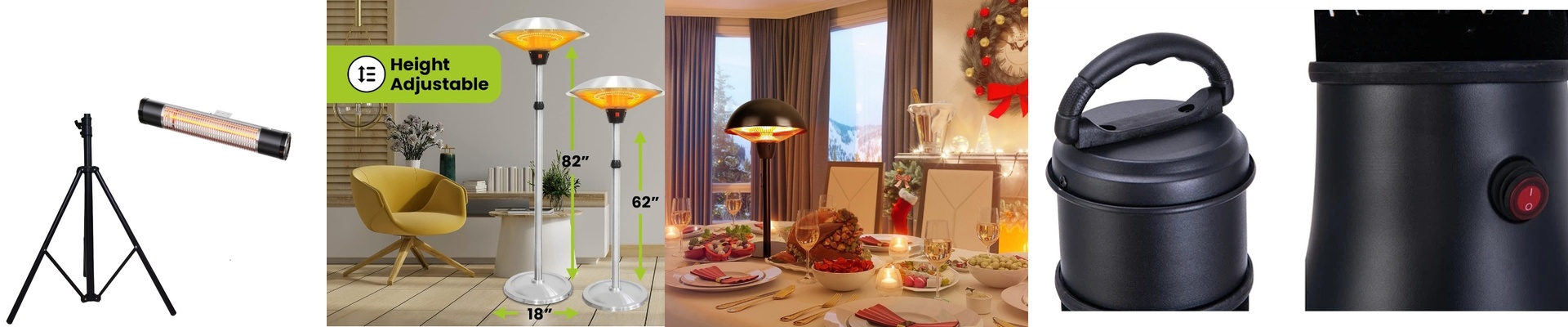


In a busy kitchen, every minute the oven takes to come up to temp is a minute you lose on tickets, on margin, and on food that goes cold. Preheat lag and uneven heat in a deck or convection oven don’t just slow service — they rob pizza and bakery items of the crust and caramelization customers are paying for. A warming display heat lamp is the practical move that keeps finished food at serving temperature while the oven gets the next batch ready. What matters under the hood We built this lamp around a high-output halogen element that throws radiant heat instantly — no warm-up time. The quartz envelope handles thermal shock from splashes and the constant on/off cycling, and the focused beam pattern hits the holding pans and display cases directly, instead of wasting energy heating air. The specs are chosen for real-world kitchens: 120/240V options, 200–300W per lamp, and a standard E26/E27 socket so you can swap bulbs without a special order. The adjustable bracket lets you set the distance to keep surface temperature consistent, and the reflector hood concentrates the energy where you need it — even holding across the pan, no hot spots. Here’s why it plays well where you need it. Set it over the prep line or the display well, and it holds cooked items at a safe temperature without overcooking. Pizza comes off the deck oven, slides onto a pan, and the lamp keeps the cheese stretchy and the crust crisp while the next pie bakes. Bakery goods finish in the convection oven and move under the lamp for a warm, fresh presentation without drying out. You cut the idle time between bakes, reduce pass-through heat loss, and keep tickets moving. Energy use stays low because you’re heating the food, not the whole room. The short version? This is a bridge between the oven and the pass. A few practical notes. Radiant lamps perform best when the distance to the food is fixed and consistent — too far and holding drops, too close and you get spot overheating. Keep the lens clean; grease and steam film cut output fast. This lamp is for warming and holding, not for cooking or browning. Use it as a staging step, not a replacement for oven heat. Mount it away from direct splatter, and confirm local ventilation and electrical codes for commercial kitchens.