Getting Your Deck Oven to React Fast
When you’re running a deck oven, you need heat that hits now. You can’t be sitting around waiting for slow elements to warm up while your bake cycle is ticking away. If your controller is hammering the circuit with high-frequency on-off switches, you need hardware that can keep up. That’s why we built our IR lamps to hit target temperatures in seconds. No lagging. No waiting.
Why it actually works
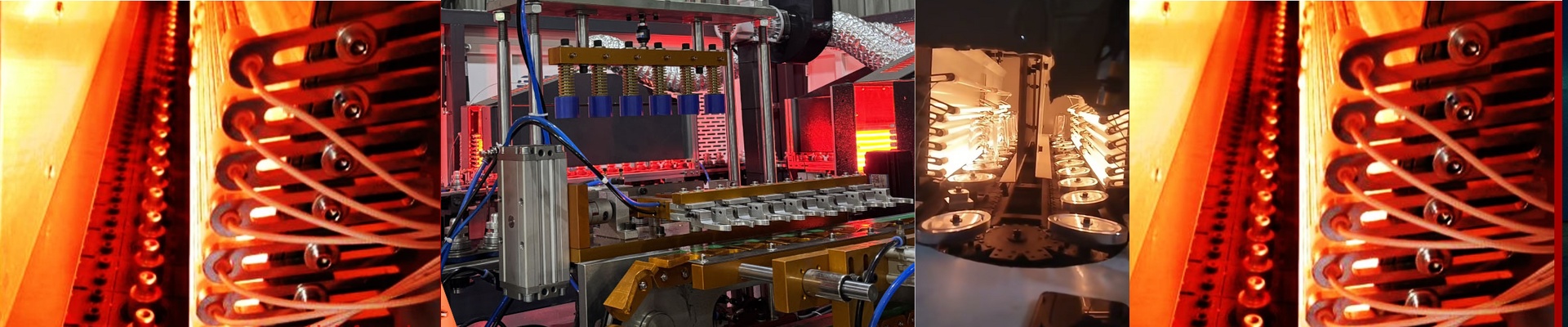
Most traditional coils have to heat up a big chunk of ceramic or metal before they do anything. It’s slow. We do things differently. We use short-wave infrared with a halogen-filled quartz envelope. Inside, there’s a tungsten filament that gets hot almost the instant you flip the switch. This is what we call a “second-level” response. Instead of waiting for the whole oven cavity to soak in heat, the radiant energy jumps straight to the surface of the dough.
Surviving the “Stress Test”
Here’s the thing: rapid switching usually kills cheap lamps. The constant expanding and contracting—that thermal shock—makes the filament brittle until it eventually just snaps. To stop that from happening, we tweaked the gas pressure inside the tube. It stabilizes the filament during those violent heat-up phases, so the lamp doesn’t give up on you. These lamps are built to take a beating from PID controllers. But a word of advice: pair them with a high-quality SSR (Solid State Relay). If your hardware has slow decay or leaks, you’ll get flickering, and that will eat your filament life alive.
Fitting them in (and a heads-up)
We made these as drop-in replacements, so they fit standard deck oven footprints without a fight. We also reinforced the end-caps. That way, the electrical contacts don’t oxidize and fail after a few hundred thermal cycles. Just a warning, though: this kind of heat isaggressive. Because the response is so fast, you’re creating an intense, localized heat zone. There isn’t much of a “buffer” here. If your timing is off, you’ll scorch your product before you even realize it. Double-check your sensor calibration—don’t trust it to “even out” on its own.